Calling out the volunteers
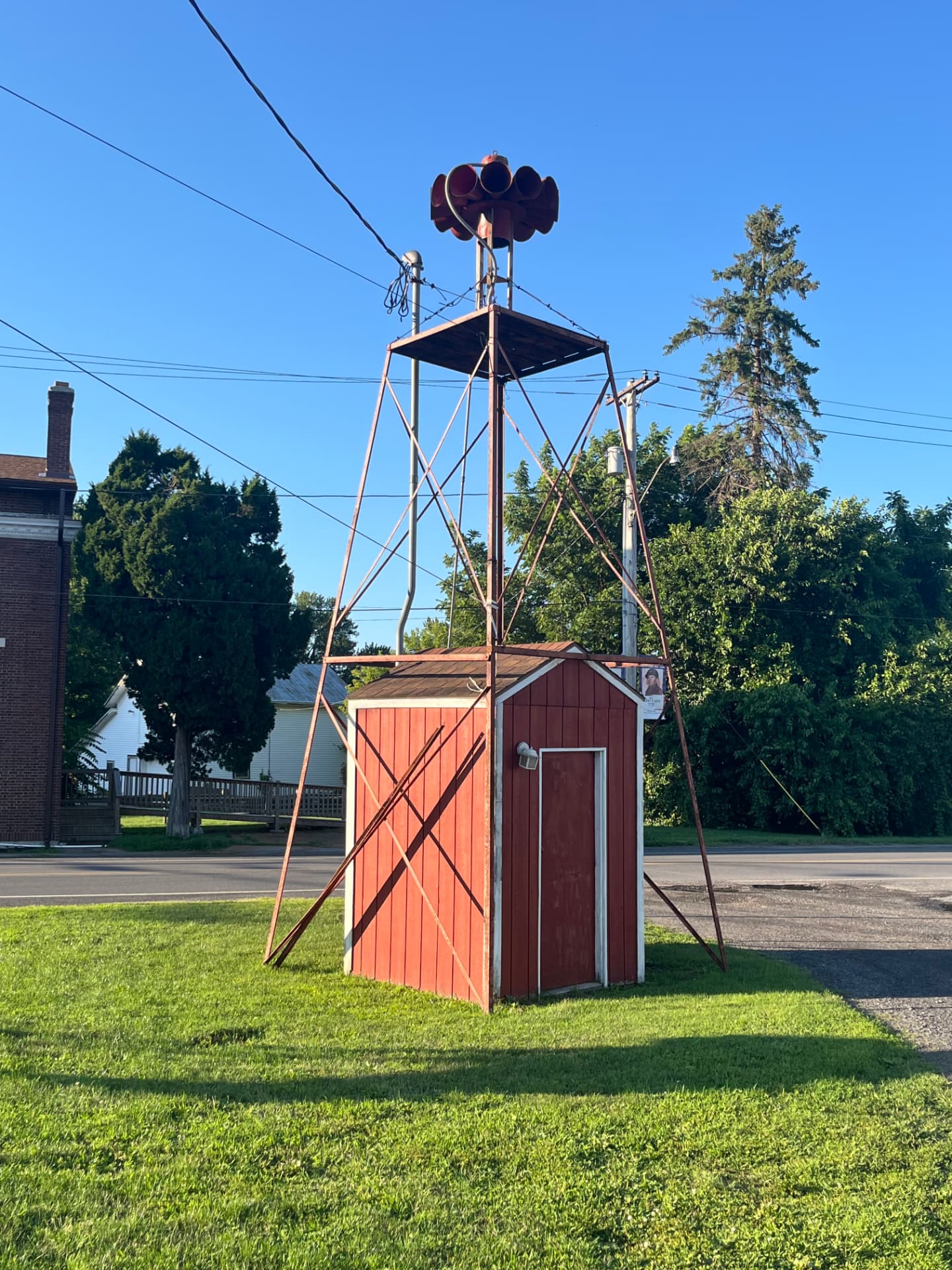
Early 20’th Century communications supporting emergency assistance were by voice, messenger, telephone and telegraph. As access to phone services expanded, household phones increased in popularity where available. This still left many vulnerabilities and dependencies on message relays as volunteers were not likely to have phone access during the day while working and the fire station would not have been occupied. The first fire siren installation (1923) was initially atop the cold storage and eventually moved the town park due to the inability to hear it. This proved critical in notifying members within earshot of an emergency requiring assistance. The siren could be heard for miles and provided notification of the noon hour “lunch time.” The daily noon alarm also served as a system test, except for Sundays.
The Fire Phone was the predecessor to the E911 emergency service, and it was dependent on the availability of members and the North Rose Diner during business hours which monitored the line during when most members were at work outside of the home and likely out of town.
The Fire Phone network was established ~1970. It was a party line placed in the fire house, homes of the chiefs, first aid captain, the Knotty Pine Restaurant (owned by Lyman Matteson) and the North Rose Diner “Gordy’s” (owned by Gordon Strohm). The Fire Phone service was discontinued in the mid-1980s and replaced by central dispatch in Lyons. Central dispatch was still active in 1997. The Wayne County E911 network was implemented ~1997.
The emergency number at the time was simply “2211.” To answer the fire phone, one would simply lift the receiver like any phone to listen and lift a white plunder mounted within the phone under the receiver cradle to speak. There was a small box mounted nearby with a switch that would activate the siren. Following receipt of the call and initiating a response, a separate call was placed to the fire department (9372) awaiting the arrival of the responding personnel. The emergency and location would then be conveyed and written on a blackboard just inside the engine room.
To allow the officers to travel out of town on Sundays, members took turn monitoring the fire phone at the station this was known as “fire phone duty.” Often, family members would accompany the members to pass the time; the only means of entertainment at one time was a Black and White TV with rabbit ears. On a good day, 3 channels may be available.
As technology advanced radio monitors and scanners started to appear. This would allow members to monitor the source of the calls within their homes. As stated, the primary method to alert firefighters of a call was to sound the siren located in the center or town and atop the fire house. Members would have no insight into the nature of the alert and would proceed with all haste to the station to wait for further direction. Upon arriving at “The “Hall” (the fire house was/is commonly referred to as “the hall”), the process would be to acknowledge the call and announce the nature and location of the call over the radio, notify county dispatch of the units responding and list them as out of service and respond as applicable. When calls for medical assistance were received, the officers would attempt to staff the call without sounding the siren causing undue alarm and arousing members needlessly.
Once the 24/7 E911 system was implemented and a County Dispatch was established in Lyons NY ~1997, there was no longer a need for the costly Fire Phone system. At some point prior to the E911 system a direct phone line was implemented to connect the county dispatch located at the Lyons Fire department which was a paid/volunteer organization and manned 24/7. The line directly to Lyons allowed for Lyons dispatch to initiate the North Rose alert tones and siren remotely.
The introduction of the “monitor”
The Plectron Corporation was formed in 1955 in Overton, Nebraska, and soon began manufacturing tone-activated home alerting receivers, competing with earlier more expensive Motorola models. The Plectron radio receiver would monitor the fire band radio frequencies located within a member’s homes.
Plectron emergency alerting receivers were used by first responders to monitor radio traffic and manufactured from the late 1950s through the late 1990s. They were widely used by volunteer firefighters, ambulance crews, and law enforcement. These units were purchased at the members’ expense and were relatively expensive. A plectron scanner cost approximately $120 in 1970, in today’s dollars about $700-900.
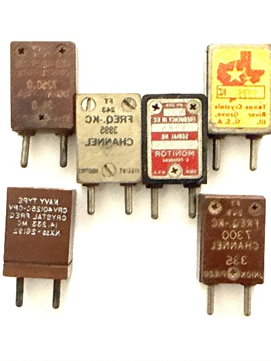
These units were expensive and only received limited frequencies dependent on “crystals.” The crystals were like plug in electronic chips of today and were designed to receive a unique radio frequency. Wayne County communications dispatch operated on an assigned frequency and the monitors required a “crystal” tuned to that particular frequency.
Later models would continue to monitor and additionally provide alarm when emergency alert “tones” unique to each fire department were initiated at the fire house or county dispatch. The monitors could be set to filter, or ignore, any tones other than the department you wished to follow. One could listen to all fire communication across Wayne County, which provided a source of entertainment, and it was somewhat addicting.
The evolution of the “monitor” led to the programmable digital scanners which could monitor (scan) several frequencies across fire and police frequency bands without “crystals. The scanner technology allowed the owner to simply program the unit with the frequency of interest. This technology would advance to allow for scanning of additional emergency services and local highway departments.
As technology evolved, network repeaters became more numerous and efficient; personal pagers became popular among the members and would alert if the department tones were activated. Initially, these were not provided by the department and were procured by department at a cost to the members. The department now issues pagers to active firefighters.
Forward several years to the age of cell technology and we now can monitor a vast number of communication frequencies across many organizations with cell phones.
Radio communication remains the primary means for firefighters between command, individuals and equipment. Many law enforcement and other government agencies can also transmit and receive over secure communications networks by encoding messages that cannot be deciphered or accessed by the general public.