
A lunch-hour ignition
North Rose is a small hamlet in the Town of Rose, roughly ten miles south of Lake Ontario and midway between Rochester and Syracuse. In 1983 it was home to about 750 citizens.
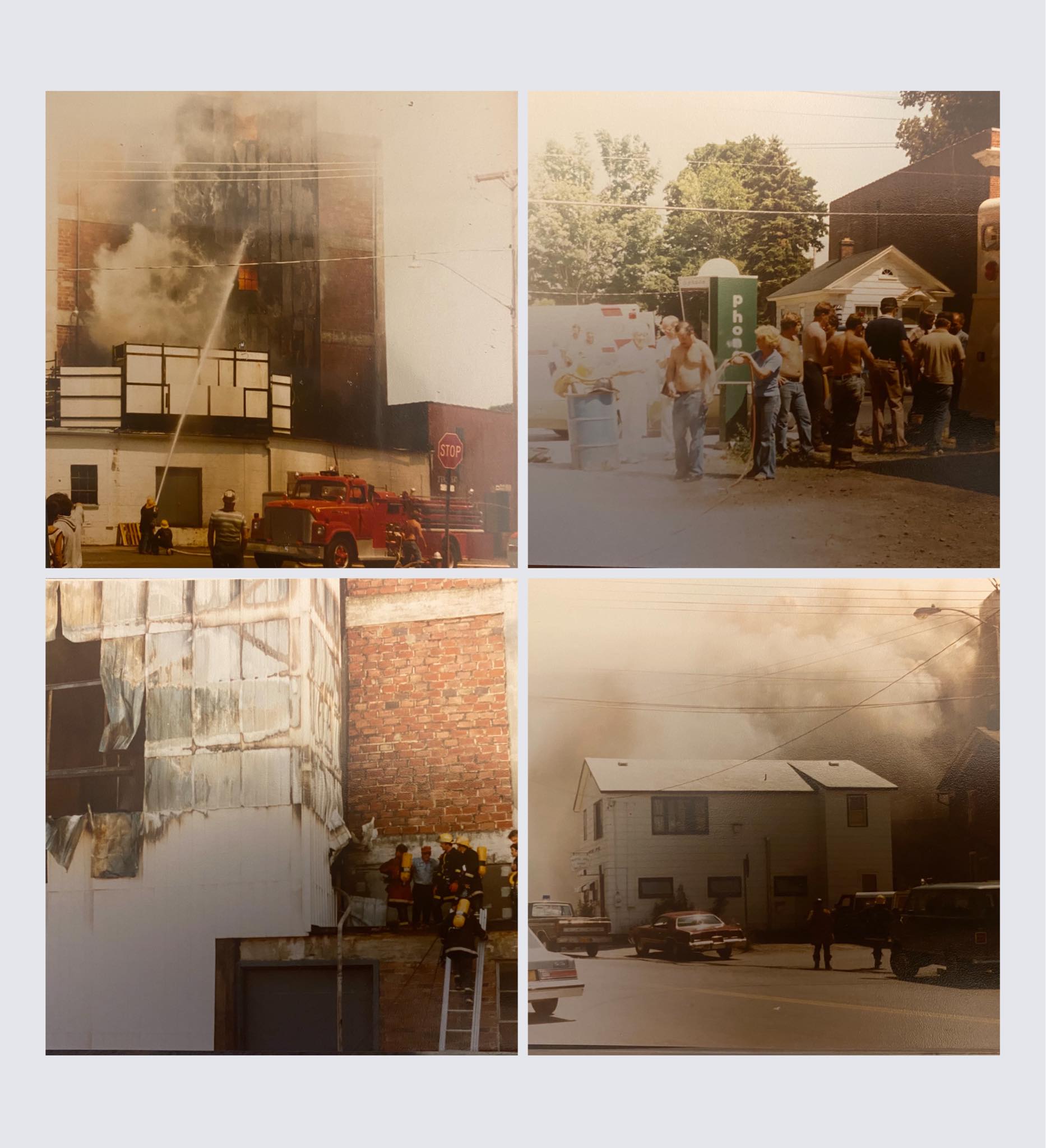
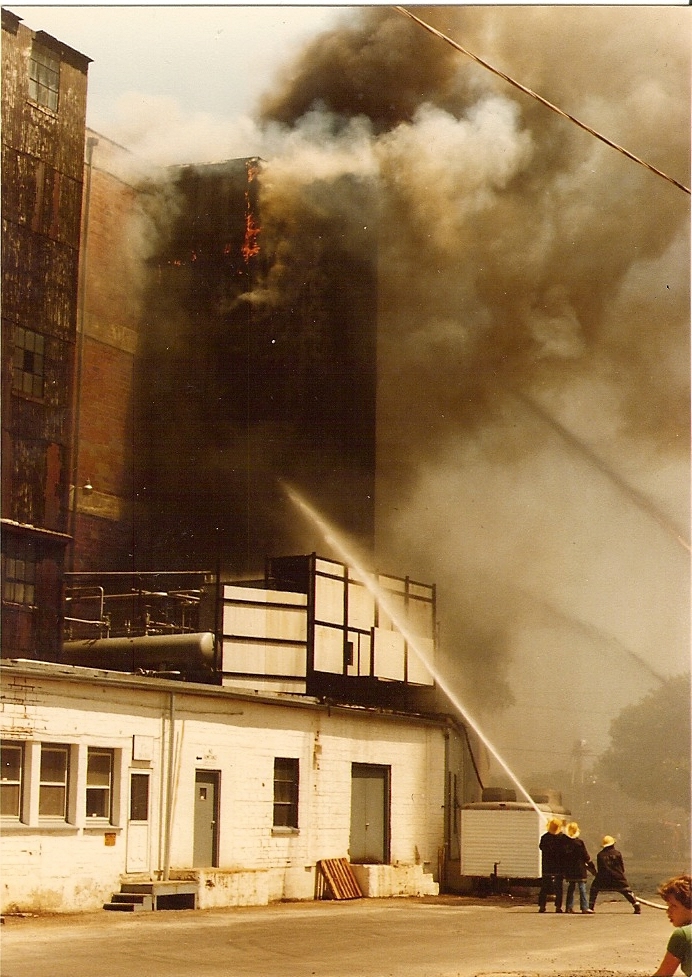
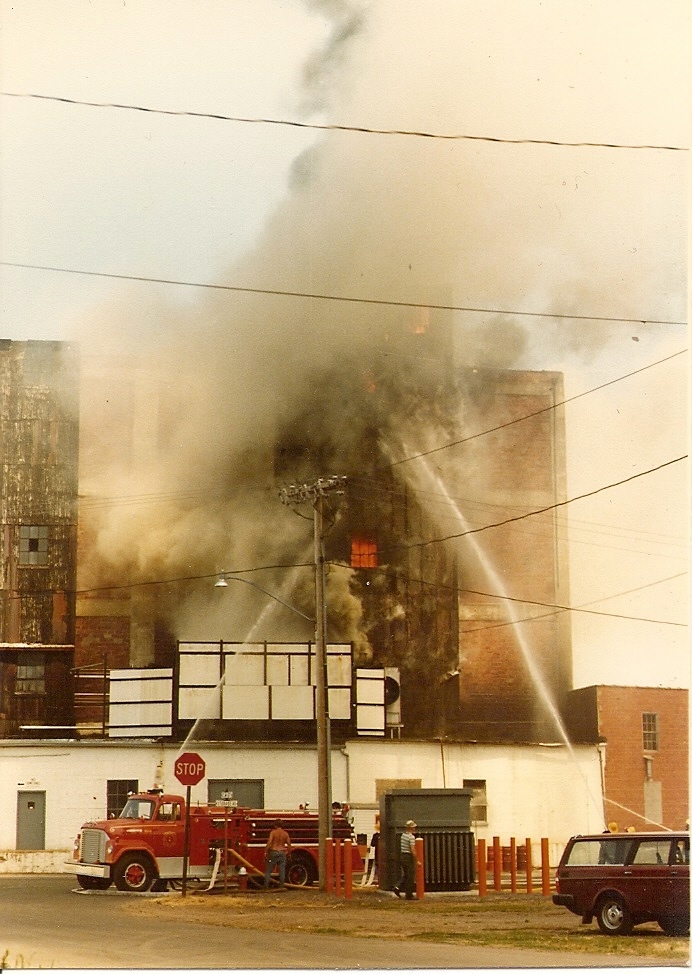
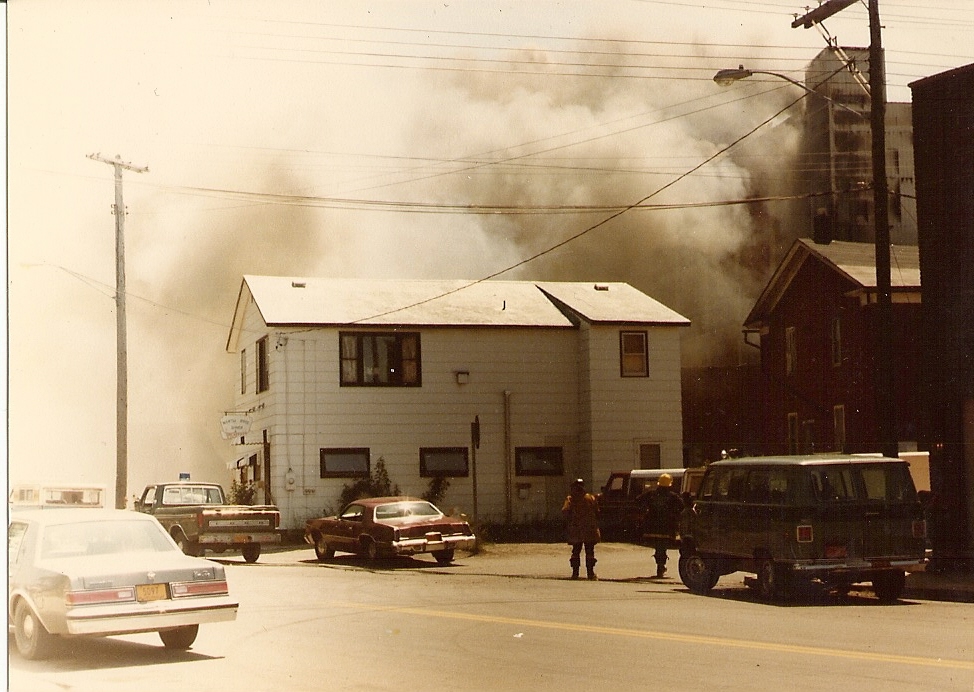
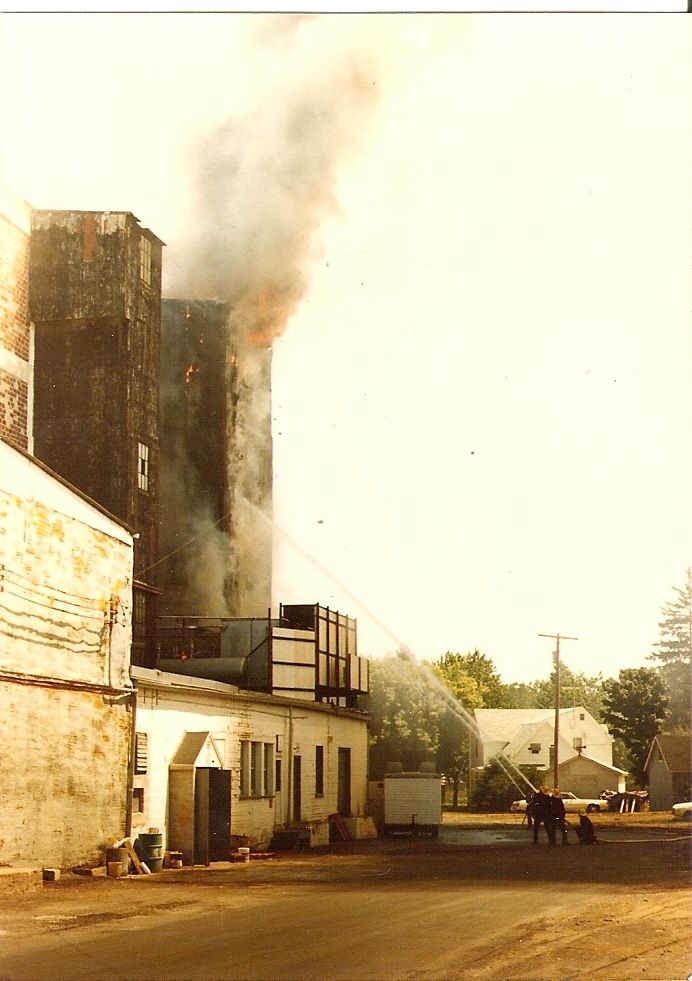
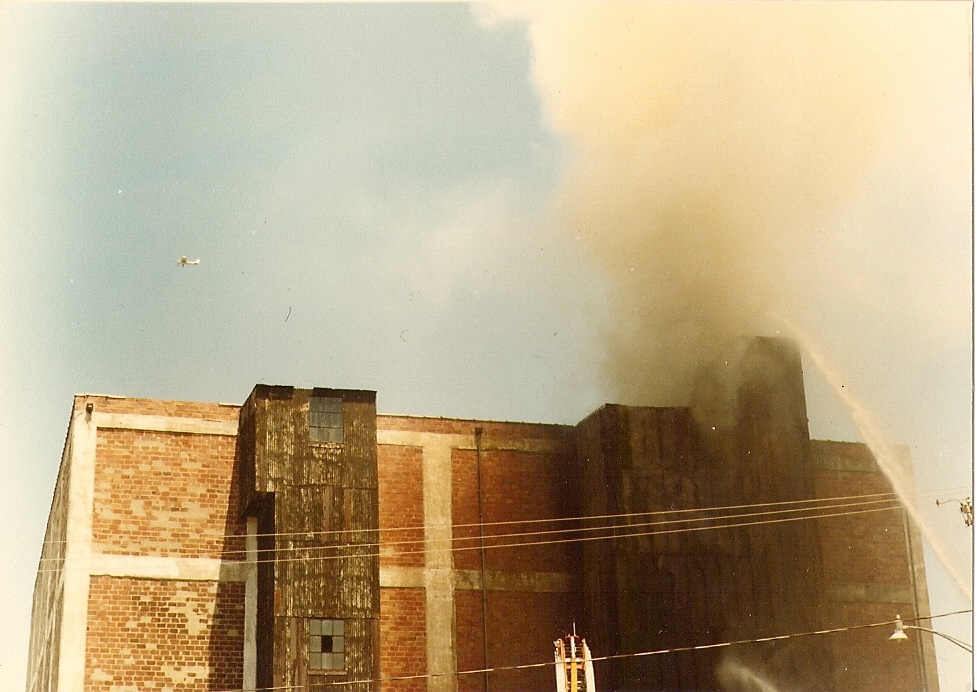
The fire began during the lunch hour — thankfully, no employees or contractors were inside. It was triggered by the ignition of polyurethane insulation being sprayed within a large refrigerated storage space. The conflagration released heavy black smoke on two separate occasions, along with unknown toxic chemicals, as the event progressed over the next several hours.
Town Supervisor Joseph DeAngelis, in consultation with the NRFD fire chief and incident commander, concurred that evacuation of the community was the appropriate course of action. First responders and law enforcement executed the evacuation shortly after the initial response; many residents sheltered at North Rose–Wolcott High School. Mutual aid came from across Wayne County, and federal and local authorities from many agencies took part in the post-analysis.
The on-scene commander
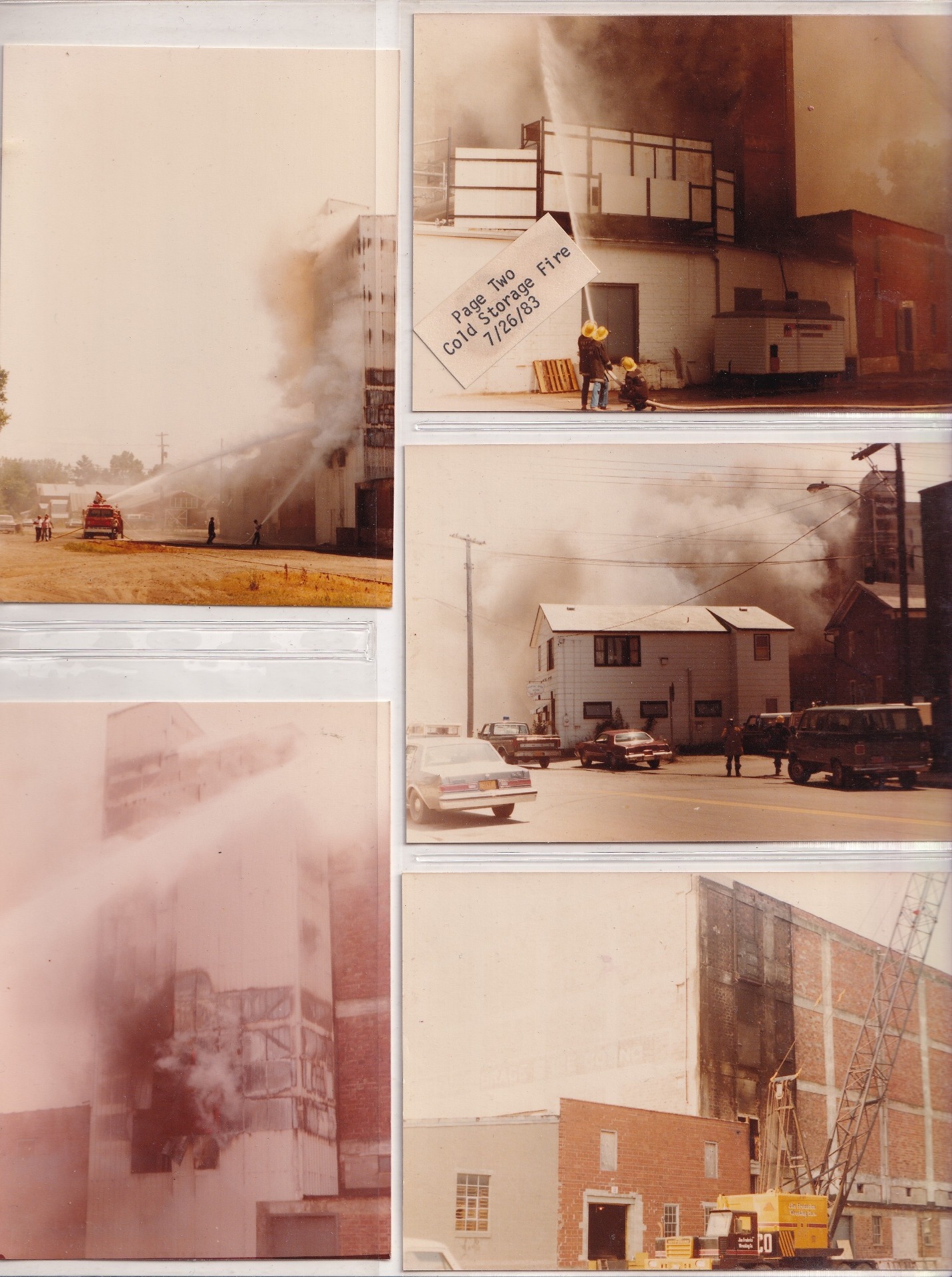
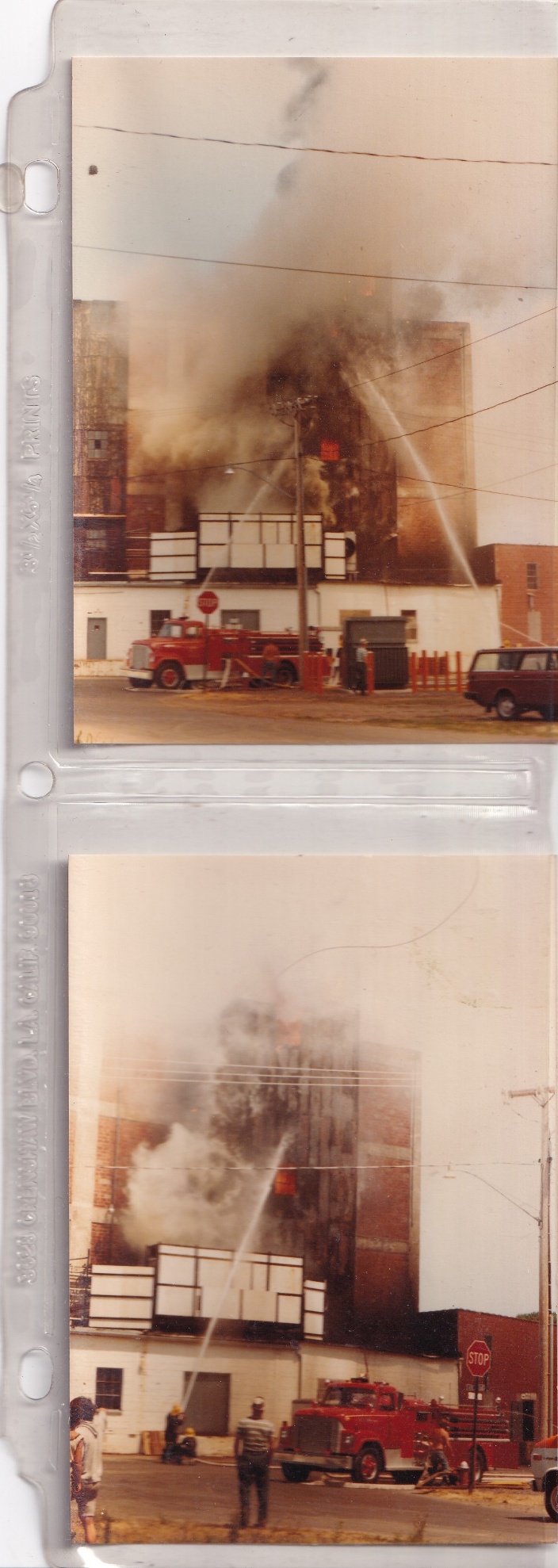
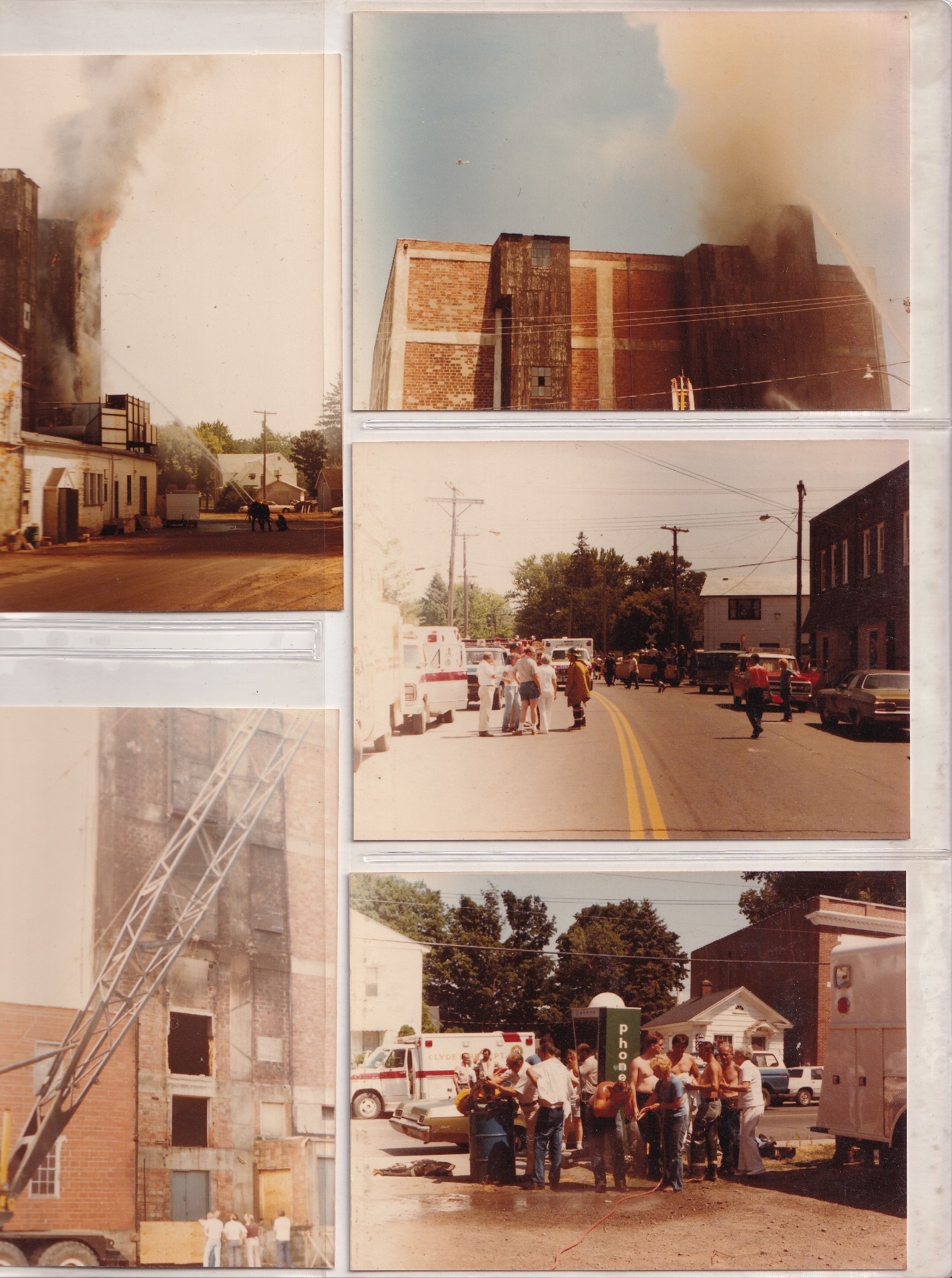
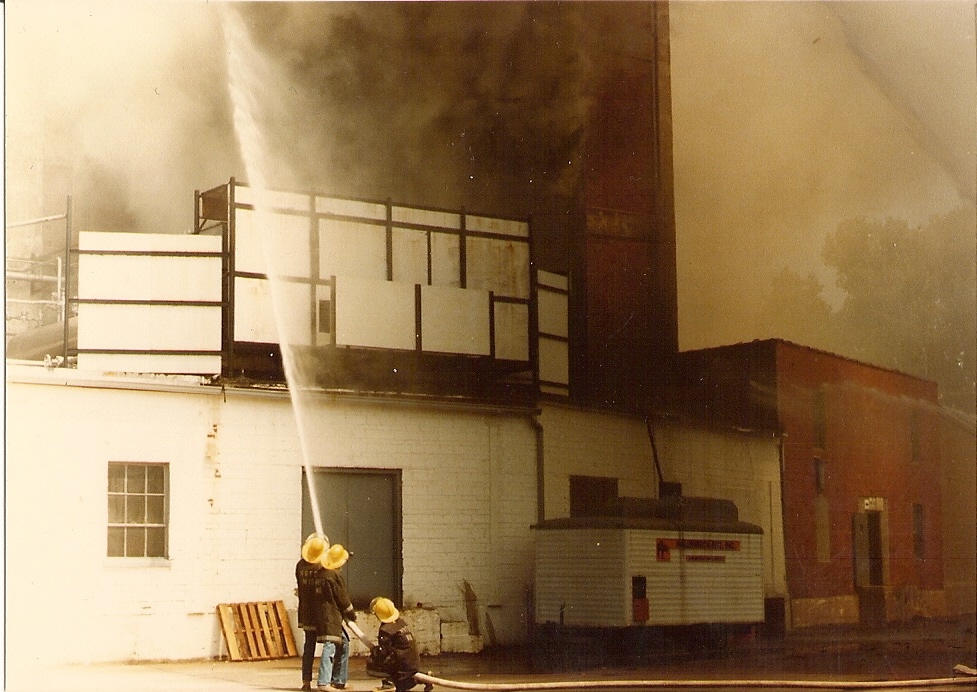
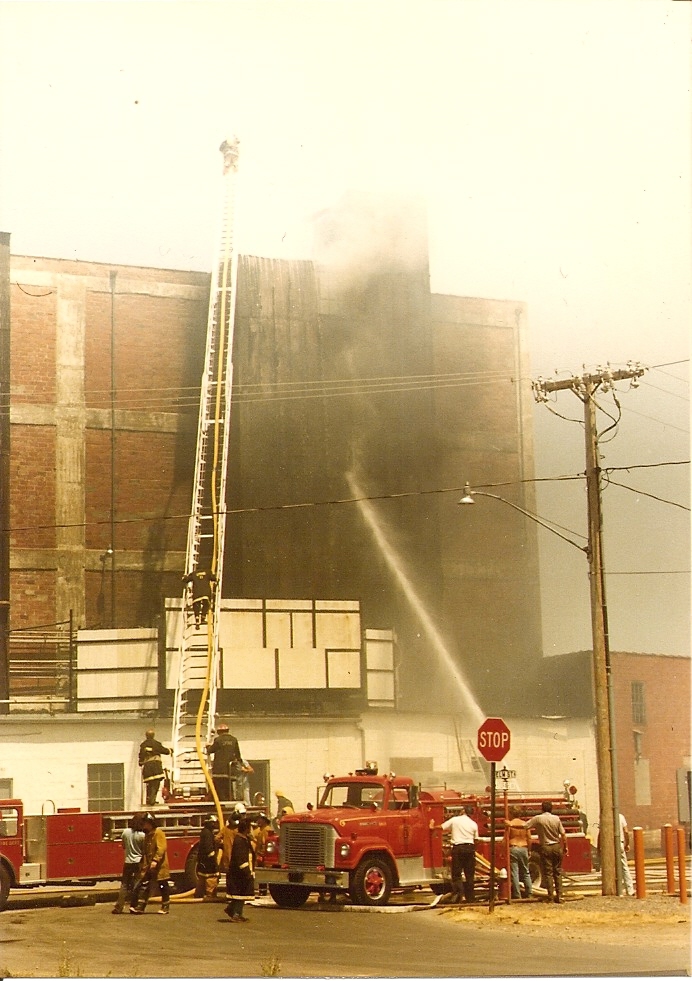
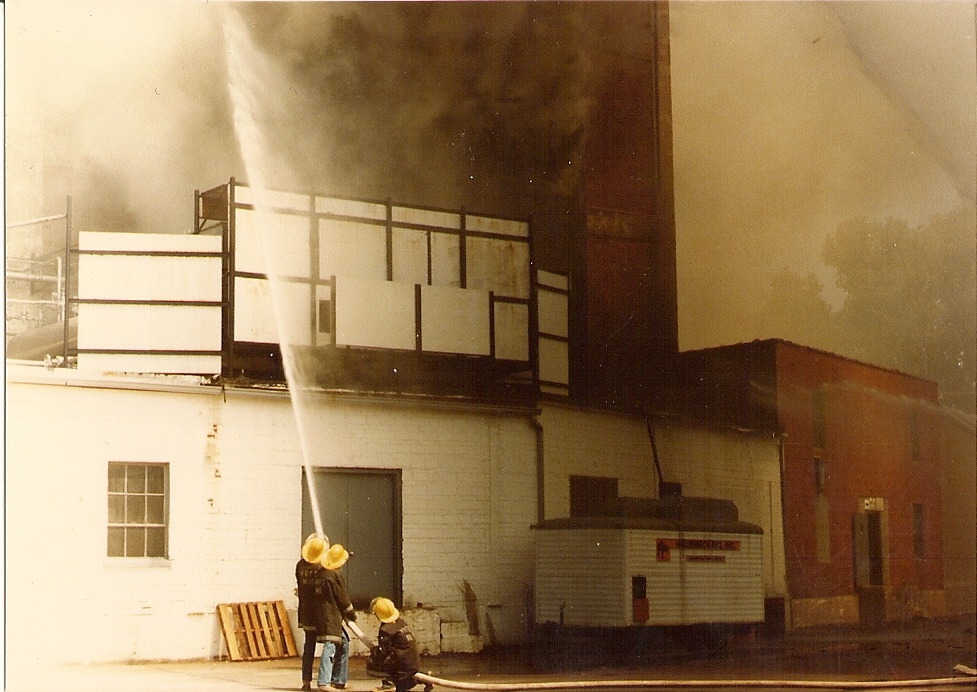
Chief Charles Tompkins commanded the scene, supported by Wayne County Fire Coordinator Rick Bond. The incident required an "all hands" mutual aid response including Rose, Clyde, Lyons, Newark and Wolcott, among other neighboring companies. On arrival, extensive black smoke was pouring from the building.
At one point the Newark fire department deployed a large ventilation fan on the assumption that the fire had been contained. The fire then flashed over, producing an explosion and an extreme release of black smoke that engulfed personnel and equipment under a blanket of soot and debris.
"This was demoralizing for the crews battling to control the situation."
First Assistant Chief Bobby Guthrie and Second Assistant Chief Ed Thomas provided direct support managing the fire scene and resource deployment.
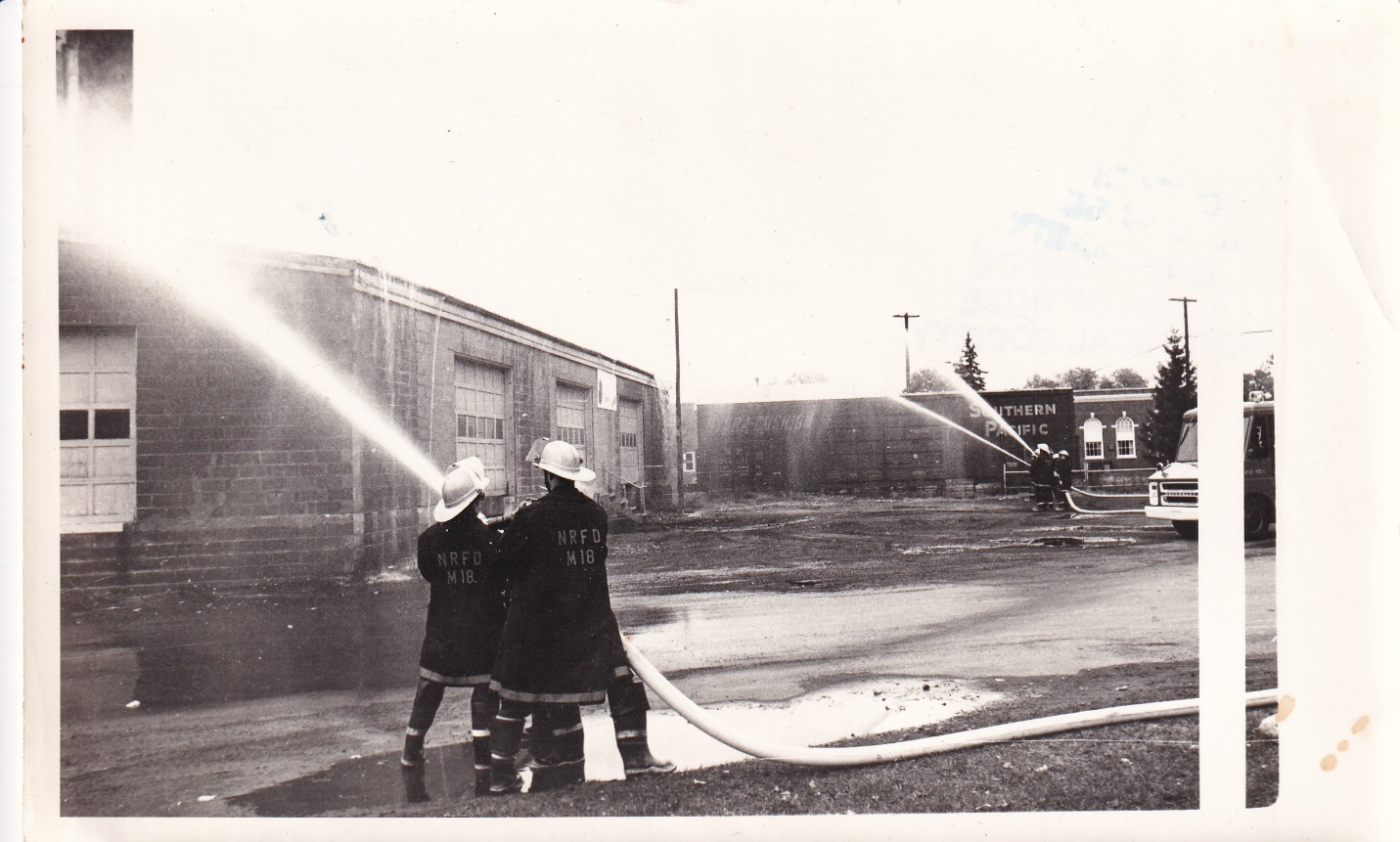
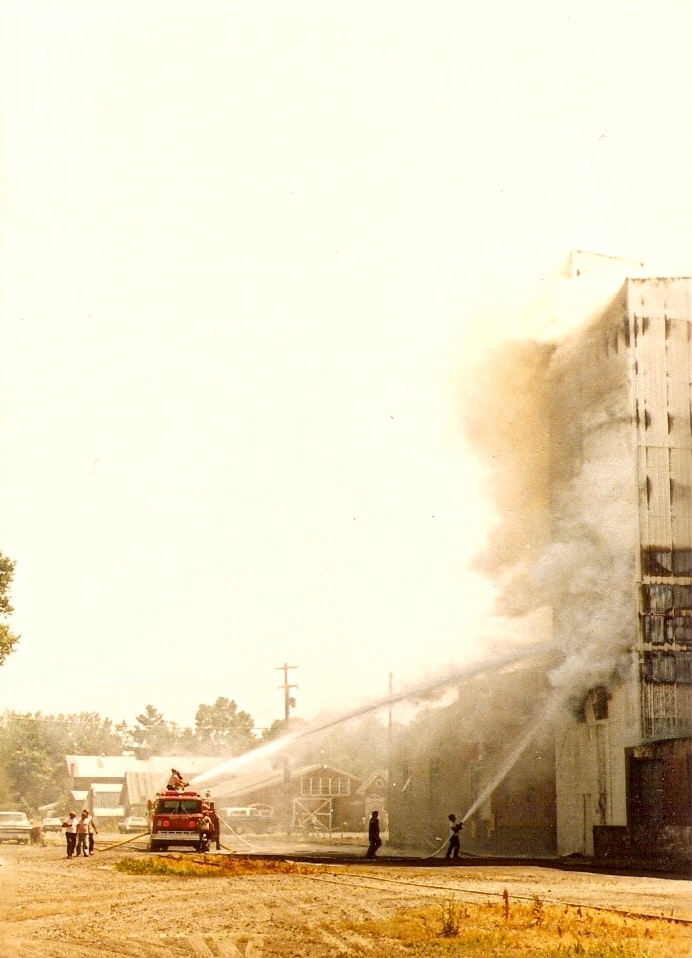
- The NRFD pumper — new and recently delivered — took position north of the building on the railroad tracks.
- Wolcott set up at the end of Railroad Avenue and transitioned south to the back side of the storage, access likely gained between Skutt's Bean House and the warehouse.
- The Rose pumper worked the intersection of Elm Street and Storage Avenue, providing a water relay to supporting equipment.
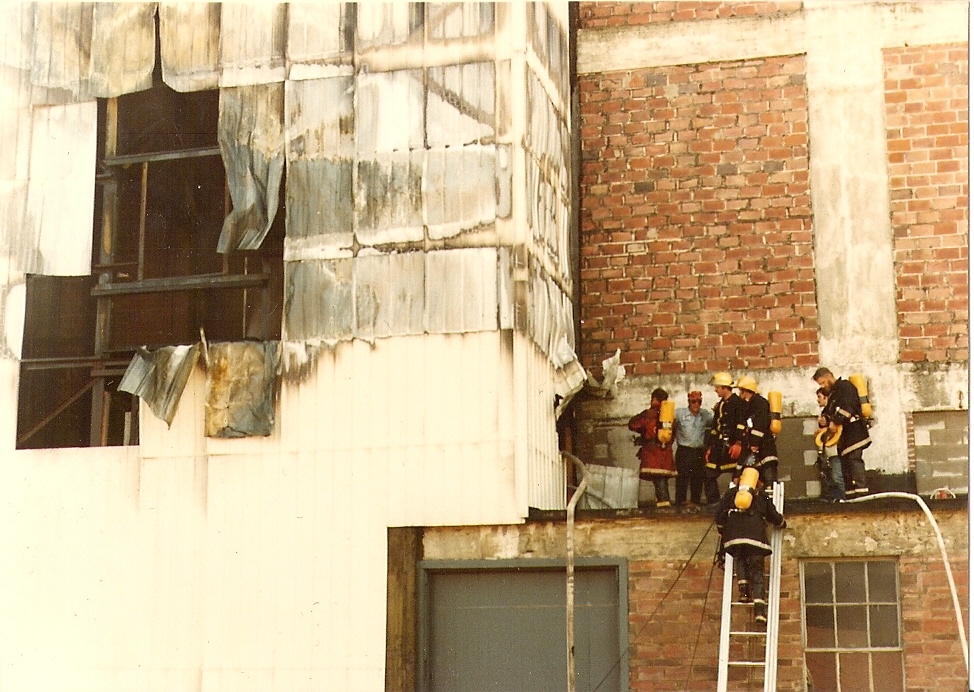
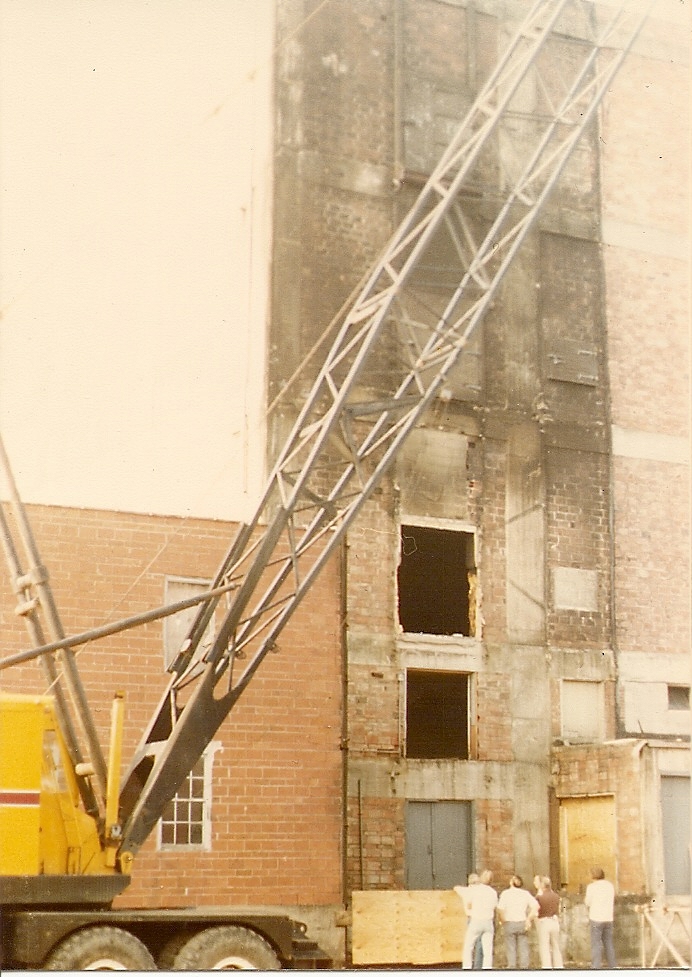
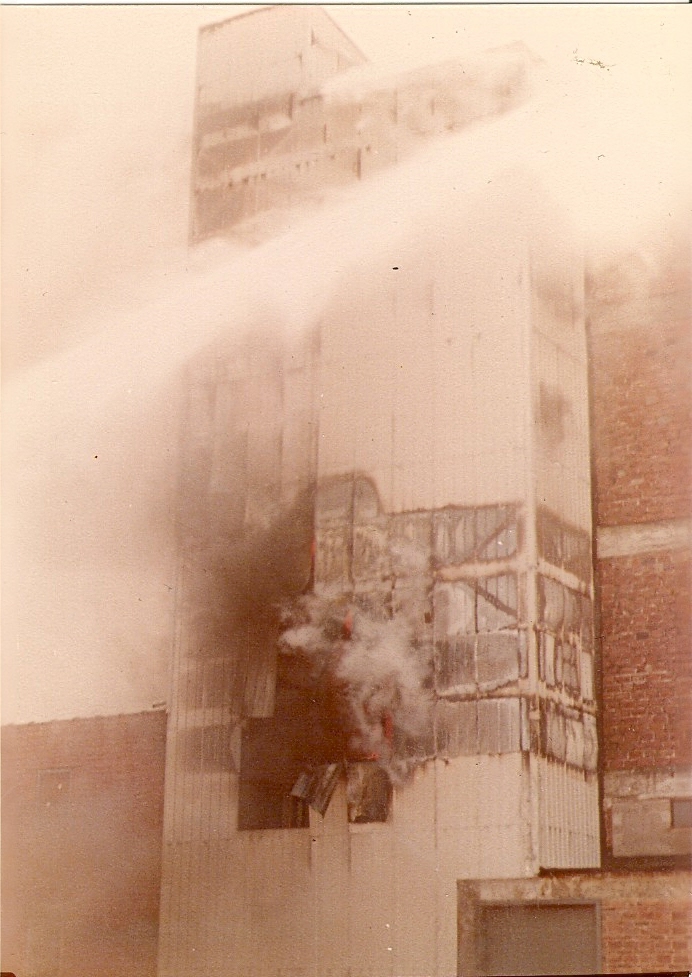
- Additional units were staged to attack the elevator shaft on the south-east side.
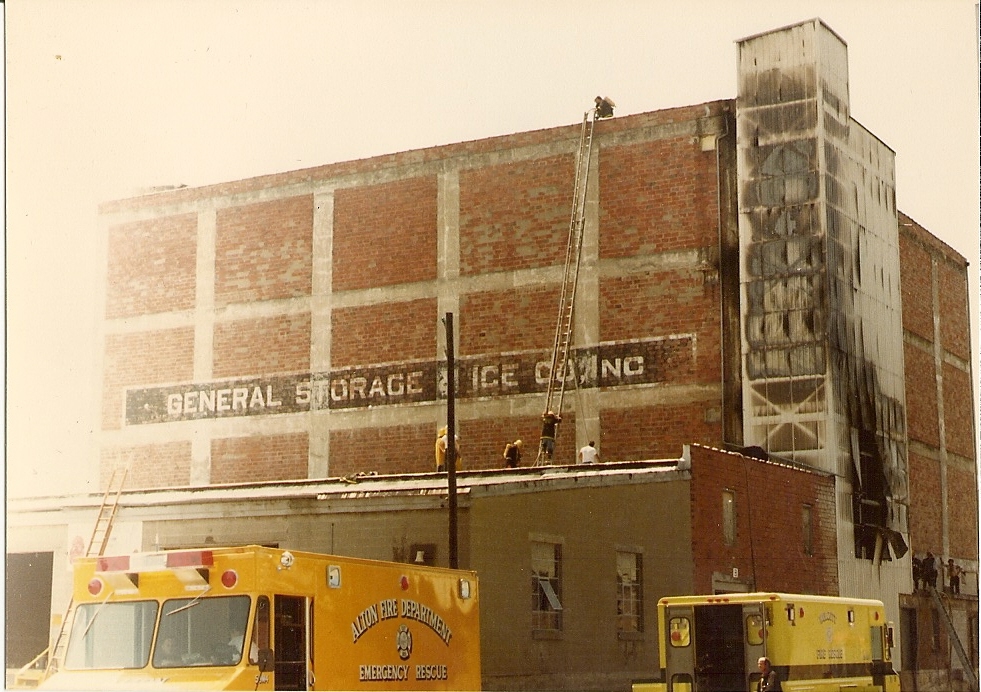
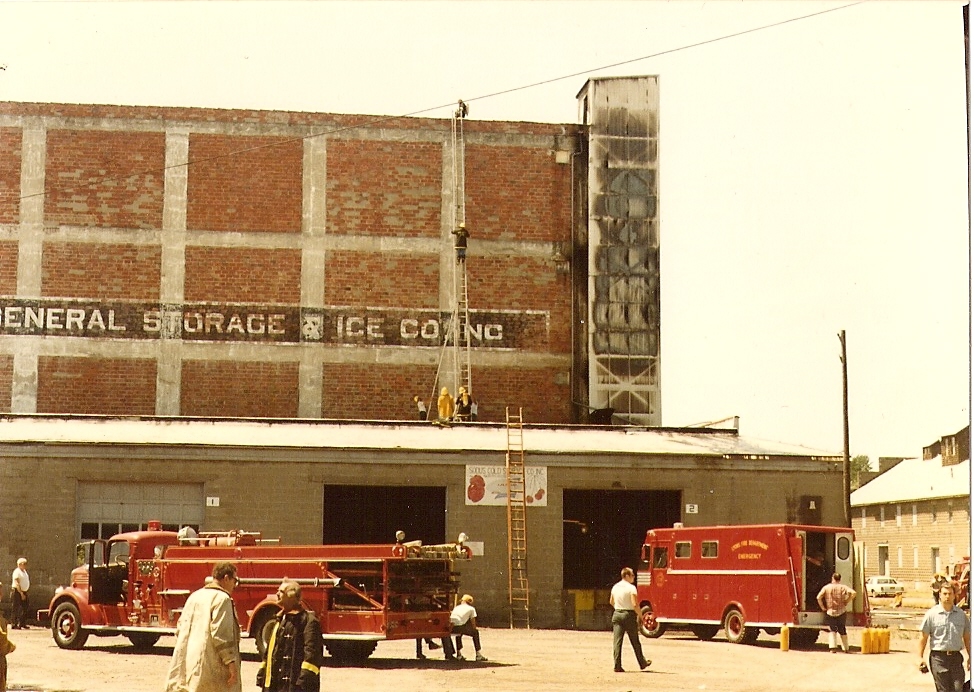
- The Lyons ladder truck provided ladders to access the roof via the loading dock and attack the elevator shaft from the east.
- Attack lines were deployed from the ground on the north side; the attack was external only.
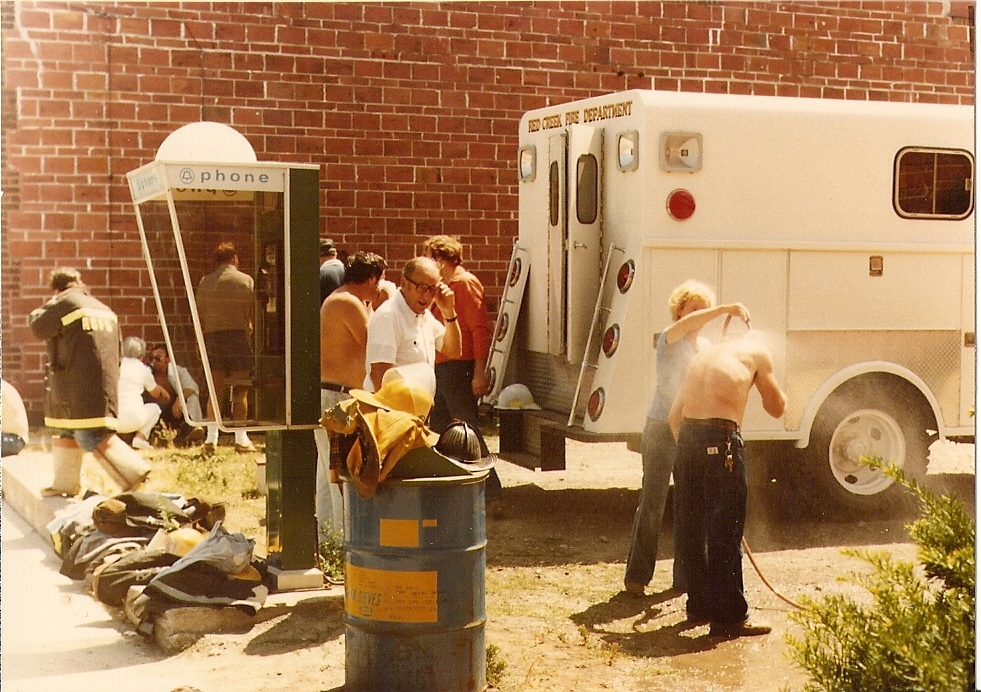
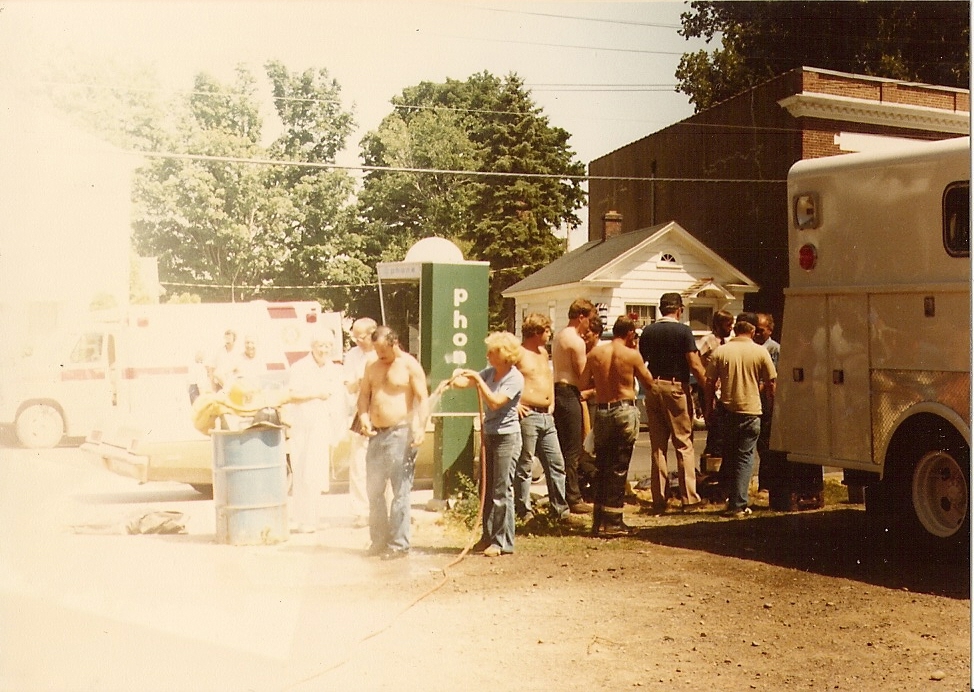
First Aid Captain Kenan Baldridge staged a triage center on Railroad Avenue in front of what would have been member Gale Anthony's. David Guthrie was overtaken at the scene; several members required follow-up care and transport to local hospitals — including Chief Tompkins himself, who displayed excessively high heart rates.
Water, soot, and five years of litigation
The Department of Environmental Conservation expressed alarm at the considerable amount of water used and the potential environmental impact. Studies measured and monitored groundwater for toxic chemicals and particulate matter. The spill report recorded diphenylmethane diisocyanate as a hazardous material and noted that a state of emergency had been declared.
"A fire and explosion on the 2nd floor of the cold storage company resulted in toxic fumes and contaminated water used in fighting the fire. Groundwater may have been affected. Will test for possible effects."
Officials struggled to characterize the exposure. Ken Fanfoni of the state Health Department's Geneva office said soot samples had not been analyzed because officials did not know what chemicals to look for. Gene Burns of the Chemical Transport Emergency Center in Washington criticized that reasoning: "the thing I find totally illogical is someone saying they can't analyze a sample because they don't know what to look for." Dr. John Hawley of the state Health Department did not believe a public health hazard existed in the hamlet, and the Department of Agriculture and Markets later determined that hundreds of thousands of pounds of stored cheese and butter — including two million pounds of Kraft cheddar — were safe for consumption.
Bill Bishop, the owner in 1983, recalled in an April 2026 conversation that both elevator shafts and elevators were completely replaced. "We actually came out of that mess pretty well. It took five years to fully settle with the insurance companies." The storage was down only a few days, no product was lost, and testing on the ash produced the comment that there were more dangerous substances in a household fireplace. Local merchants were less fortunate: their businesses were closed for days.
Monday, July 25, 1983
- about 12:00 p.m.
Fire erupts on the second floor of the four-story Sodus Cold Storage warehouse at Storage Avenue and Main Street, where two workers from Hallenbeck-Ritz Inc. of Rochester had been spraying two-part polyurethane insulation across a 10,000-square-foot storage room. No one is believed to be inside when it lets go.
- 12:15–12:18 p.m.
Harold Green, 71, of South Poplar Street is on his front porch when the fire starts with an explosion: “It sounded like a diesel on the track — it roared and roared and then there was black smoke 500 feet in the air.” Town Supervisor Joseph DeAngelis declares a state of emergency at 12:18.
- early afternoon
Police knock on doors and announce the evacuation over loudspeakers. Roughly 250 residents living within a half-mile south of the plant — the direction of the wind — are ordered out. State police and sheriff's deputies block traffic from every direction into the hamlet.
- about 2:00 p.m.
Thick black smoke bursts from a rupture in an elevator shaft; a second heavy emission follows about fifteen minutes later. Hundreds flee. “The thick, black, toxic smoke suddenly poured forth from the building in such a fast and deadly manner that all we could do was run.”
- about 3:30 p.m.
Art Button, director of the Finger Lakes division of the state Office of Disaster Preparedness, reaches the scene to relay information to the governor's office and assist town officials. Clyde is asked to bring every oxygen tank it has.
- about 4:15 p.m.
The fire is knocked down. No cause is determined. Ambulance crews continue shuttling stricken emergency workers to Myers Community Hospital in Sodus and Newark-Wayne Community Hospital.
- Tuesday, July 26
Evacuation widens to nearly all of the hamlet's remaining residents — some 750 in all. Officials, chiefs, and the DEC meet in the North Rose Fire Hall to decide the next step; Fire Coordinator Rick Bond is taken back to the hospital.
- Wednesday, July 27
Residents return home. A local state of emergency stays in force until 12:30 p.m. Saturday, and the ground around the plant remains blocked off.
Casualties and the hospitals
More than thirty firefighters, plant workers, and residents were felled by the fumes. Myers Community Hospital in Sodus treated and released 35 people; Newark-Wayne Community Hospital treated and released seven. Both hospitals went to a disaster alert, calling in off-duty staff, borrowing personnel for the emergency room, and taking in extra stretchers and linens while volunteers directed traffic and family members.
Victims described headaches, nausea, dizziness, weakness, shortness of breath, burning throats, and upset stomachs; many who took in large amounts of the gas vomited. Carol Beidue of the North Rose Emergency First Aid Crew helped coordinate crews from nine Wayne County towns. Heat and fatigue took their own toll. Nursing supervisors advised patients "what to look for, and to come back if they have trouble breathing."
- Sgt. Keith Benjamin, 32
Wayne County Sheriff's Department — admitted to Myers Community Hospital for smoke and fume inhalation. He had complained on scene that residents would not leave: “I keep telling these people the fumes are extremely dangerous, but they just don't want to leave.”
- David Guthrie
North Rose firefighter — admitted to Myers Community Hospital for smoke and fume inhalation.
- Harry Aunkst, 24
Lyons firefighter — admitted to Myers Community Hospital for smoke and fume inhalation.
- Esther Dagle, 82
Of North Rose — admitted to the intensive care unit at Newark-Wayne Community Hospital for observation.
About twelve more people were reported en route for treatment for fume inhalation, which officials warned might have delayed effects. Head emergency nurse Katie Craig said roughly 75 people came to Myers to be checked the following day, 15 to 20 of them — mostly firefighters — with respiratory symptoms and sick stomachs. The state Health Department later monitored twelve who fell ill, distributing follow-up questionnaires.
How dangerous was it?
State officials identified the smoke as carrying methylene diphenyl isocyanate and trichlorofluoromethane. Ken Fanfoni of the state Health Department's Geneva office said fumes from the charred insulation ran roughly five times the recommended safe levels and could be fatal in large volumes: "If you can smell the fumes, the dosage is approximately five times higher than recommended safe levels." With some 40,000 gallons of contaminated water still standing in the building, he pressed to keep the evacuation in place — "Until the water is removed there is no chance the fumes will disappear."
The insulation's manufacturer disagreed sharply. Gary Ruckle, vice president of FSC of Riverside, California, said the product consisted of polymeric isocyanate and polyurethane, approved by Underwriters Laboratories and meeting state and federal safety standards: "They're no more toxic than a can of aerosol." Gene Burns, speaking for the Chemical Manufacturers Association's chemical information service, argued local officials had confused polymeric isocyanate with lethal forms of isocyanate.
"I can't believe that they would evacuate 750 people because they think some water has polymeric isocyanate in it. Calling polymeric isocyanate toxic is like calling table salt acid."
Vincent J. Brigante, vice president of hazardous material operations for the cleanup contractor, reported that readings inside the warehouse showed only slightly elevated ammonia — "probably from leaky freezers."
Pumping out, hauling away
Bruce Finster, senior sanitary engineer for the DEC's East Avon office, recommended that everything inside the building be treated as hazardous waste — meaning removal by a licensed disposal company. Cecos International of Niagara Falls and New England Pollution Control of Batavia were hired. Two shifts of ten worked around the clock from about 7:30 p.m. Tuesday in protective clothing and air masks.
Three 5,000-gallon tankers hauled fire water to SCA Chemical Services Inc. at Model City, near Niagara Falls, where it would be filtered and the resin buried; charred insulation and debris followed by dump truck to the same secured site. Of the 125,000 gallons of water used on the fire, about 15,000 were pumped out and treated; the rest vaporized or soaked into the ground. Brigante put the cleanup at $25,000 to $30,000.
- Air out the house and vacuum any soot; if you smell gas, wait outside 15 to 30 minutes.
- Wash furniture and hard surfaces with detergent; wash dishes before using them.
- Discard any food left out during the evacuation, pet food included.
- Discard leafy garden vegetables — lettuce, cabbage, cauliflower, broccoli — as too hard to clean; wash all others thoroughly.
Guidance from the Wayne County Cooperative Extension Agency, relayed by Thelma Wideman, public information officer for the county Office of Disaster Preparedness.
Four test wells
Because water samples drawn inside the building contained some thirty compounds considered potentially dangerous, the DEC ordered four test wells drilled 40 to 60 feet from the plant, ranging from 20 to 35 feet deep, at a total cost of $4,100. Drilling began that Friday to learn whether the fire water had seeped into the ground and reached the hamlet's supply.
State geologists reported that the North Rose water table slopes north, away from the municipal wells — one about three miles northeast of the plant, the other roughly a mile south — whose water is tested, treated, and held in a 400,000-gallon reservoir before reaching homes. DEC sanitary engineer Mary Jane Peachy said it was unlikely fire water would reach them.
"North Rose water: not contaminated." Preliminary groundwater results three weeks after the fire found no contamination, and the state Health Department confirmed the finding.
Two weeks later, still a mystery
By August 9, state and local fire inspectors and insurance adjusters had spent more than a week in the burned-out second floor without agreement. "At this time we still haven't been able to agree on what exactly caused the fire. About the only thing we know is that there was an explosion of some sort," said Fire Coordinator Rick Bond. Fans, lights, and other electrical items from the charred area were removed and locked in storage cabinets, to be examined jointly for signs of an electrical malfunction; other state officials suspected the insulation being sprayed on the walls.
Three 10,000-square-foot storage areas were about half full at the time; the second floor was empty because it was being converted into a freezer. Assistant Chief Robert Guthrie noted that the two adjoining elevator shafts had channeled the fire away from the third and fourth floors, which were only lightly scorched near the doors. No official damage estimate was issued, but Bond put fire damage between $5 million and $10 million, with both elevator shafts to be replaced and the second floor needing extensive repair.
Who came
Wayne County Fire Control dispatchers Harold Brentnall and Marie Whitaker tracked which units were where through the afternoon. The Wayne County Sheriff's Department held command of the emergency, with State Troopers from Wolcott, Williamson, and Newark on continuous traffic control. Herb Smith directed the county Department of Disaster Preparedness; cots and food waited at North Rose–Wolcott High School, though most evacuees stayed with family and friends.
How it was reported
- State of emergency declared in North Rose — 250 ordered to leave their homesWayne County Star, July 1983
- 750 in North Rose flee contaminationDemocrat and Chronicle, July 27, 1983
- North Rose evacuees can't return home yetFinger Lakes Times, July 1983
- Ailments from fire fumes spreadingSyracuse Herald-Journal, July 1983
- North Rose has its residents backDemocrat and Chronicle, July 28, 1983
- Two weeks later, cause of fire at North Rose plant remains a mysteryDemocrat and Chronicle, August 9, 1983
- North Rose water: not contaminatedWayne County press, August 1983
Photographs credited in the coverage to Bill Armstrong and Bill Huff Jr.
Agencies and officials
- Charles Tompkins
- NRFD Fire Chief / Incident Commander
- Richard 'Rick' Bond
- Wayne County Fire Coordinator
- Joseph DeAngelis
- Rose Town Supervisor
- Kenan Baldridge
- NRFD First Aid Captain — triage on Railroad Avenue
- Bobby Guthrie
- NRFD First Assistant Chief
- Ed Thomas
- NRFD Second Assistant Chief
- Herb Smith
- Director, county office of disaster preparedness
- Art Button
- Director, Finger Lakes division, state Office of Disaster Preparedness
- Dr. John Hawley
- NYS Department of Health engineer
- Ken Fanfoni
- NYS Health Department, Geneva office
- Bob Finster
- NYS Department of Environmental Conservation
- Mary Jane Peachy
- DEC sanitary engineer
- Don Eisman
- State Department of Agriculture and Markets
- Gene Burns
- Chemical Transport Emergency Center, Washington DC
- Vincent Brignante
- VP hazardous material operations, New England Pollution Control
- Anne Wunder
- Myers Community Hospital spokesperson
- Paul Kehoe
- New York State Senator
The scene
Appendices
The primary-source files behind this account. Select an appendix to open or download it.
Fire Investigative Services interview with Chief Charles Tompkins, conducted on behalf of the insurance underwriters.
Open document →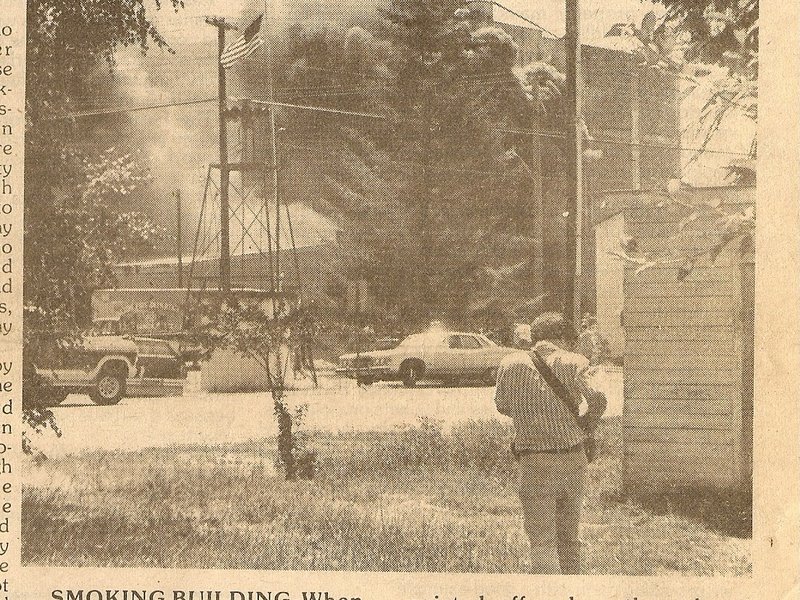
Twenty-seven pages of scanned newspaper coverage and photographs from the days of the fire and evacuation. Article recovery is in progress. Future releases with include updates
Open document →